Last week in my article on Feeding Beliefs, I discussed how we can relax about run-of-the-mill thoughts (ROTM thoughts), whether they are pleasant or unpleasant to us, and instead learn to feed beliefs, which are more enduring and resistant to mood changes than ROTM thoughts. This week I want to push a little further by discussing a way we can tweak beliefs to make them even more helpful.
In my lifetime I have run in response to a coach’s whistle tens of thousands of times, and I put up with it because it was the only way to play the sports I loved. But I can’t stand the feeling of my lungs burning and gasping for air (truly gasping for oxygen rather than just air, some recent experience at higher altitudes cemented this idea in my mind). I saw myself as a football player, basketball player, track athlete, bench presser, pullup machine, dip beast, but never a cardio athlete. It wasn’t my thing. Run a mile? Screw that. I’ll sprint thank you very much, preferably no more than 100 yards.
In addition to my dislike of burning lungs, a back injury at age 30 caused nerve damage down my left leg and left me without the strength to plantar flex my own weight on the left side (I can’t push my heel off the ground on my left side). So as an adult, I tended just lift weights and walk, both of which are healthful but less intense for the lungs and running out of oxygen. Then something wild happened. I decided to climb a mountain and realized I better get over my fear and distaste of cardio. So I began to push myself, but I kept running into a problem (and still do). During many workouts, I keep hearing a voice in my head say, “Dude, you aren’t a cardio athlete.”
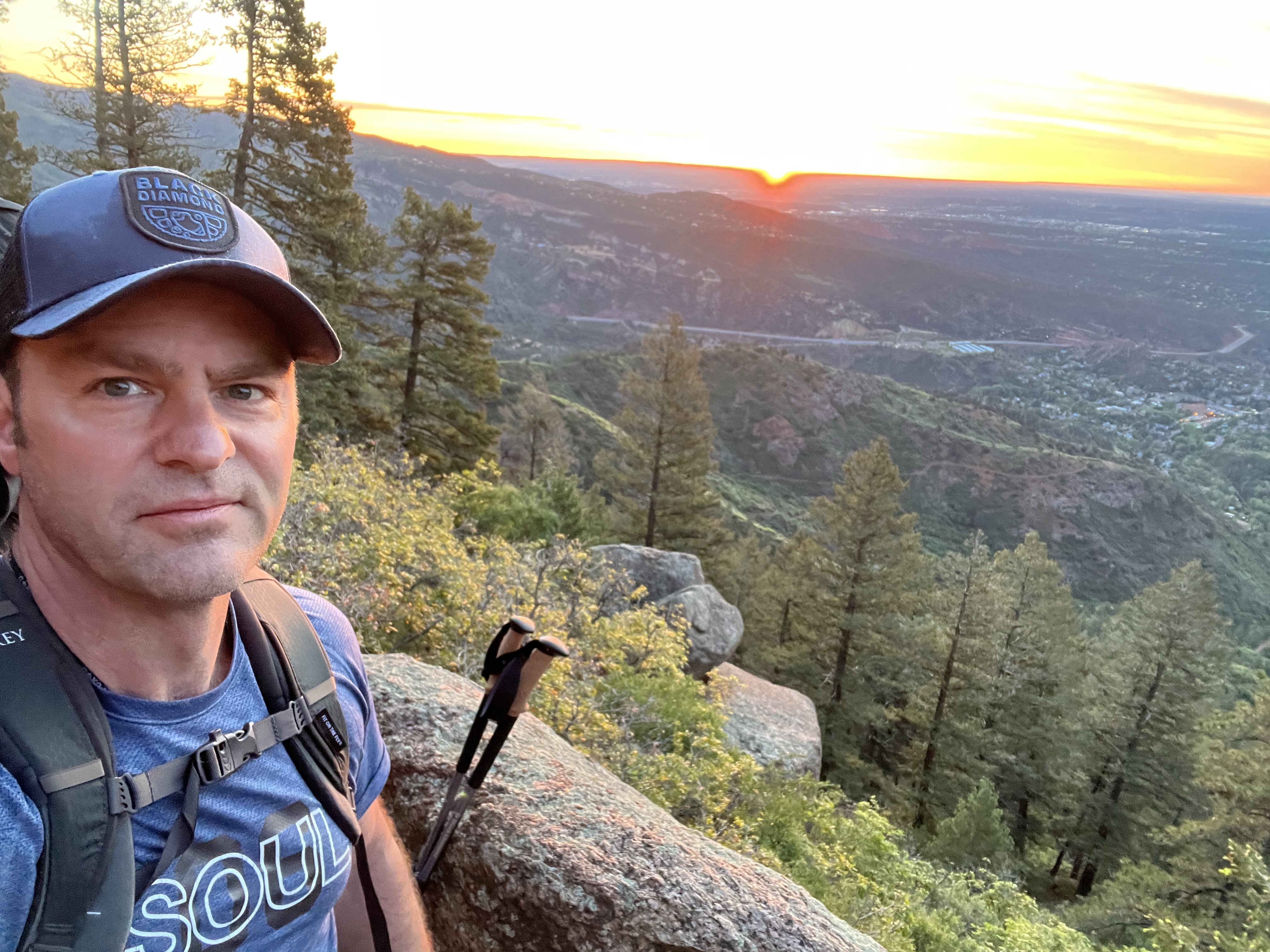
I needed a solution. One way to solve this is with the knowledge and process I described last week. “You aren’t a cardio athlete,” is just a thought. It’s an annoying and recurring thought, but it’s just a thought. I would never teach a client or myself that eliminating certain thoughts is possible. It’s a fool’s errand that can have disastrous consequences. It’s much better to realize all kinds of thoughts can and do arise, and none need dictate how we act, respond, or choose. Do some thoughts influence how we act, respond, or choose? Of course. But plenty don’t. And none need to dictate anything to us if we have some knowledge about beliefs. So I push toward believing, “I’m playing the role of a cardio athlete to reach my mountain climbing goals.” And with each new workout I solidify that belief. I let the other thoughts come and go without wasting much mental effort or worry on them.
That’s one belief I can push toward, but there might be even better beliefs that will have a great impact on my habitual behavior. It turns out that we are highly influenced by identity (specifically nouns that describe our identity such as runner, mountain climber, athlete, helper, etc). So if I want to encourage certain behavior of myself, it pays to tap into identity. For example, maybe when viewing my activities as cardio, I tend to have some annoying thoughts pop up into mind, things like, “You aren’t a cardio athlete.” But what if I start thinking of myself not as a cardio athlete but as a mountain climber? What if these activities aren’t expressions of cardio but rather are opportunities to confirm my identity as a mountain climber? Our identities fuel behavior, and in turn, choices of activities become opportunities to confirm our identities. It turns out this is a very powerful way to increase behavior.
What do mountain climbers do? They lift. They climb hills and stairs. They ride bike. They go for long walks. They pack 50 pounds into a pack and go for a hike. They practice sport specific skills. These are all things I can do that are much more enjoyable than cardio. And even if they technically fall into what many people view as cardio, I don’t need to see them that way. I see them as opportunities to confirm my identity as a mountain climber, and we have strong tendencies to act according to our identities.
If you are trying to develop new habits, see if you can create a new identity to fit with these habits. Give it a name that’s a noun. Runner. Mountain climber. Reader. Activist. Weight lifter. Artist. And even if you aren’t initially able to believe in your new identity, push toward it. Push hard. Think of opportunities to perform activities that will confirm your new identity. Do them. Seek more. Let each accomplishment further cement your belief in your new identity. Identity fuels opportunity and accomplishment further cements belief in identity.
Thank you for reading. While this is not a new idea or concept to me or others, I want to give a shout out to Jonah Berger, his book Magic Words (2023), and the research he describes in it. For me, it’s been a great reminder of the power of nouns and identity in influencing behavior. More to come from these important topics.
Leave a Reply